A Neat Little Compressor: FMR Audio RNC 1173 Review
Posted: November 21, 2013 Filed under: Studio Equipment | Tags: FMR Audio, RNC 1173 Review Leave a comment
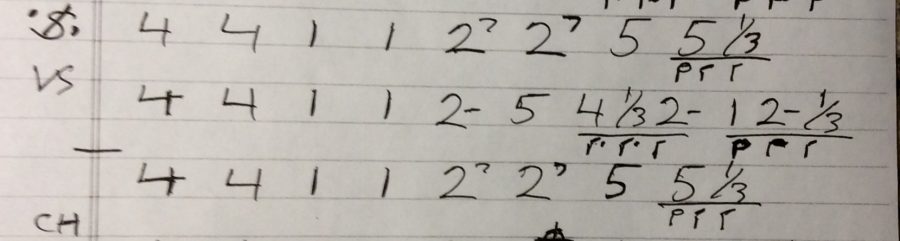
FMR Audio 1173
Before we start the review of the FMR Audio RNC 1173 I want to mention the new service available from Nashville Trax Recording Studio for people who produce their own recordings at home as well as for commercial studios who have clients that need session quality musicians and singers. Nashville Trax offers session quality custom tracks you can easily add to your project: drums, bass guitar, guitar, violin, cello, mandolin, piano, synthesizer, Hammond B3, lead vocals, background vocals, harmony vocals, harmonica, sax, flute, you name it!
Here are a few of the vocalists available. Or how about bass guitar? For the other options simply go to the main Nashville Trax site and click on “More” in the upper right corner which will open all the various instrument and vocal options as well as mixing and mastering services.
A Quick Review of the FMR Audio RNC 1173 Compressor
The 1173 is interesting because it’s designed by a husband and wife electronics operation whose philosophy is “put money into components, not packaging.” They also have incorporated a proprietary “cascading compression circuit” they call “Really Nice” mode, that can be switched into and gives controllable compression that builds incrementally as the signal passes through each stage.
When I say little, it’s little! It can just about fit in the palm of your hand.
It compresses signals. If you’re not into electronics the best way to explain that is when you record a sound source, guitar, fiddle or whatever, it can be uneven in volume. Compression raises the lowest amplitude sections and squashes the peaks resulting in a more even, more easily controlled sound.
Tests: It’s not pretty, it’s not all that sturdy but it’s easily the best “under $600” compressor I’ve used and the cascading stage is liquid. It’s already aced a test on fiddle, snare and bass guitar. It does a decent job on vocals, but if that’s your principle application and you can afford to go above $600, keep looking.
Why mess with a cheap compressor with a $2,500 Avalon and other more expensive outboard, as well as software based, compressors available? Because it’s not about money, it’s about sound! I’m keeping it! It won’t be my go-to unit and if it’s your first and only compressor you’ll replace it someday but I think this is a good tool to add to your bag of tricks. Sometimes cheapest sounds best. You never know until you try it!- b.e.
Tracking Session Alert!
Posted: November 21, 2013 Filed under: Studio Services | Tags: Christmas, nashville trax, rhythm tracking session Leave a comment
You Can Be On The Next Nashville Trax Session!
Rhythm tracking sessions have been scheduled for Wednesday December 11th and Monday December 23rd. If you’d like to get a song on either session, please send your MP3 rough to nashtrax@bellsouth.net or your CD to the address on the website.
There’s a three song minimum on these sessions if you wish to be present and watch your song being recorded. No minimum if you just want to get a song on the session.
Note that it’s far too late in the year to record songs about Christmas for 2013 unless it’s for a personal project. If you intend to pitch a Christmas song for one of the numerous Christmas projects released each year by movie companies and major label or even independent artists, record now, but aim for Christmas of 2014.
Song Pitch : Rachel Holder on Curb
Posted: November 21, 2013 Filed under: Song Pitch Opportunity | Tags: Curb Records, looking for songs, Rachel Holder Leave a comment
R. C. Rhimes of Lebanon, TN is looking for songs for artist Rachel Holder who’s signed to Curb Records which is one of the bigger labels on Music Row. Take a look at their site and you’ll recognize at least a couple of well established artists on their roster.
Submit your song to:
LAMusicPublishing.1@gmail.com
Write A Song : Three Chord Groups and Chord Substitution
Posted: November 21, 2013 Filed under: Songwriting, Songwriting Tips | Tags: Ascending the E Major Scale, chord substitution, three chord groups, verse/chorus type song, write a song Leave a comment
Three chords is enough to write a song!
Or C, F, G7, C,
Or F, C, G7, C, Any order you like is fine, note that even though here we started with the F chord, the key is still C, not F.
To write a song using a three chord group in a verse/chorus type song, establish a pattern for your verse and a pattern for your chorus. A quick example using the key of G three chord group group:
Verse:
C, D7, G, G,
C, D7, G, G,
C, D7, G, G,
C, D7, G, G,
Chorus:
D7, C, D7, C,
A simple song:
Intro:
G, D7, G D7
Verse:
C, D7, G, G,
C, D7, G, G,
C, D7, G, G,
C, D7, G, G,
Chorus:
D7, C, D7, C,
Turnaround:
G. D7
Verse:
C, D7, G, G,
C, D7, G, G,
C, D7, G, G,
C, D7, G, G,
Chorus:
D7, C, D7, C,
It’s common to add a 2 minor to the 3 chord group. The 2nd note in the C Major scale is D so the 2 minor is D minor.
Play C, Dm, F, G
Another common chord to add is the 6 minor. In C that’s A minor.
So you could play C, G, Am, F, G7, C, G7, C.
To be sure you grasp the concept let’s try an example in another key, the key of E.
Ascending the E Major Scale we have:
E, F#, G#, A, B, C#, D# and E again, up an octave.
1-4-5dom7 = E, A, B7.
The 2 minor and 6 minor in the key of E are F#m and C#m.
To apply this to songwriting you might choose a chord progression for your verses and alter it for your choruses, climbs or bridge sections, play 4 beats per letter:
V1:
E, A, B7, E – E, A, B7, B7
E, A, B7, E – E, A, B7, E
C1:
A, B7, A, B7, A, B7, E, B7
Three chords is enough to write a song!
V2:
E, A, B7, E – E, A, B7, B7
E, A, B7, E – E, A, B7, E
C2:
A, B7, A, B7, A, B7, E, B7
Bridge:
C#m, B7, A, A, C #m, F#m, A, B7
C3:
A, B7, A, B7, A, B7, E, E
Thinking in terms of chord progressions brings order where there once was chaos.
Now for something a bit more advanced.
CHORD SUBSTITUTION
There are thousands of chords but, according to the acknowledged authority on the subject, Ted Greene, the author of Chord Chemistry, every chord can be grouped into one of three basic categories: major, minor or 7th. If you understand that then you can start experimenting with simple chord substitution (pursue this subject very far and it gets exponentially complex).
The rule: Any chord in a category can be subbed for another in the same category provided it sounds good to the ear.
Does the sub serve the song? Does it support the melody?
Majors, major 7ths, major 9ths, major 13ths, etc. are in the Major category.
Minors, minor 7ths etc. are in the Minor category.
7ths, 9ths, 11ths, 13ths, etc. are in the 7th category.
Extended and altered chords are grouped by their root classification. In other words, generally, the first alteration to appear dominates. A B7+5 (B seventh sharp five means to raise the 5th a half step so the F# becomes a G note). But because the 7th appears first B7+5 would be classified as a 7th type. Ted groups augmented 5th chords as 7th types also.
So if you write a basic progression: C, F, C, F, G7
You could rewrite it: Cmaj7, Fmaj7, Cmaj7, Fmaj7, Gdom9th.
Another variation: Cmaj7, Fmaj7, Cmaj7, Fmaj9, GAug5
Or perhaps you have a basic D, Em, A7, D (4 beats each)
Perhaps jazz it up: D, Em7, Em9, A7, A13, D (play 4 beats on the D chords and only 2 beats on each of the Em category and A category chords)
But Em7 is a 7th type, correct? How can it sub for Em?
No. Em7 is a minor type because the minor appears before the 7th, and can indeed sub for Em.
Subs are extremely useful in certain songs in certain spots but it can easily be overdone. Get far beyond something like subbing a 9th for a 7th, which almost always works, and it tends to impart a jazzy flavor that may or may not serve the song. You won’t likely have much use for substitution in a classic rock song like Ozzy Osbourne’s “Crazy Train,” that pretty much is what it is. But most ballads in any genre can benefit as well as many uptempo pop, jazz, country swing and…well, let’s not set limits, you never know where just a single substitution might improve an arrangement. Hmmm…”I’m goin’ off the rails on a Jazzy Train?” I like it.
And remember, you only need three chords to write a hit. So if you use 5 or 6 chords obviously it will be a #1, lol.
Here is a post on the minor three chord groups.
We’re barely scratching the surface here. If you want to learn very basic open chord progressions and simple rhythms get my book Guitar Shop. If you want to learn more complicated chords, extended chords, how non-root bass notes work and learn all the chord substitution rules, get Ted’s book– bill watson
https://twitter.com/espantalha/status/378849811597762560
https://twitter.com/_vickyys/status/378682336620986368
https://twitter.com/anqstyTween/status/378339521794146304
More New Nashville Trax Plug ins
Posted: November 21, 2013 Filed under: Studio Equipment | Tags: Alti-verb, Antares pitch correction, Lexicon Reverb, Tru-verb, Vocal Tube Saturation Leave a commentAnd here is our new Lexicon Reverb, part of a $600 bundle that includes everything from concert halls to tiny rooms:
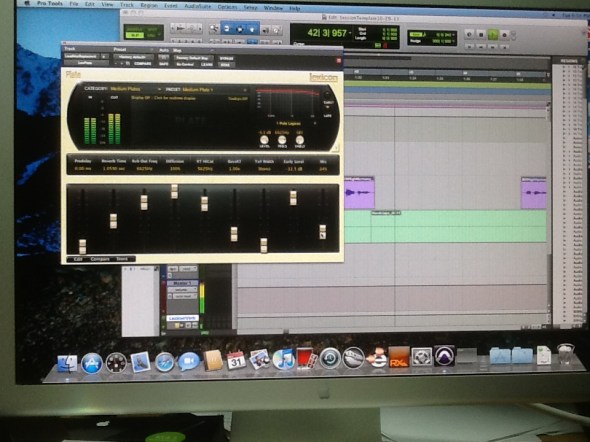
Lexicon Reverb in action at Nashville Trax
Reverb is one of the more important mix effects and Lexicon verb is the best on planet earth. This is rich, clean, spacious. When I first heard it a wave of contentment washed over my body. (Or maybe I peed myself in all the excitement, lol, not absolutely sure, but I don’t think so).
One thing I am sure about, the Lexicon bundle will raise the mix bar around here even higher.
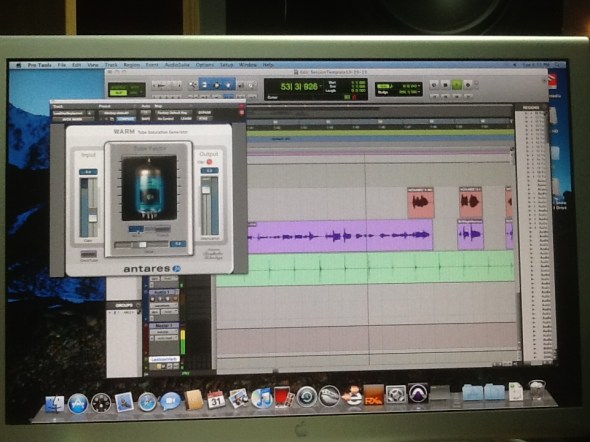
Vocal Tube Saturation in use on a Play It Again Demo… well, demo!
The above is designed for lead vocal tracks with the intention of imparting tube warmth and saturation to digitally recorded tracks; and man, it does the trick, no doubt. You can dial in just the right amount of tube warmth and/or tube saturation to add a pleasant little buzz to the vocal track.
Tube pre-amps and/or old multi-track tape recorders can be purposefully pushed into distortion but with the digital recorders almost all studios use these days, the signal is either on or off, push them into the red and the sound becomes harsh.
I wouldn’t pull this out for every song or every vocalist, but there are plenty of times I wished for the warmth of tubes or some slight clipping to give vocals that warm fuzzy edge. Now instead of “I wish I could,” it’s “can do.”
To all this, add several just-acquired types of Antares pitch correction, Antares vocal effects, Tru-verb, Alti-verb, harmonizers and more…. basically, we’re stocked to the ceiling and stoked to the rooftop, ready to make your songs sound fantastic!- b.e.
Rockin’ Contemporary Christian Sample Demo
Posted: November 15, 2013 Filed under: Christian, Samples of Our Work | Tags: Bill Watson, Christian Demo Sample, David Northrup, Jessica Brooks, Nashville singer Taryn Murphy, We Pray Leave a commentLooking to have a Christian song produced that needs to rock? Please give a listen to We Pray.
Jessica Brooks delivers a heartfelt, emotional lead track as Nashville session singer Taryn, lays down those awesome gospel influenced bgvs… eight tracks of stacked bgv tracks, no less!
We Pray:
Lead Vocal: Jessica Brooks
BGVs: Taryn
Piano: Ron Fairchild (The Oaks)
Drums: David Northrup (Travis Tritt, Boz Scaggs, Rick Derringer)
All Acoustic, Electric Rhythm & Lead Guitars and Bass Guitar: Bill Watson
Produced and Arranged by Bill Watson for Nashville Trax for songwriter Dan Mathews.
Pro demos make everyone- friends, family, artists, record company A & R and music publishers- take notice.
If you would like a quote on making a professional version of your song simply drop an e-mail with your MP3 rough version attached to: nashtrax@bellsouth.net with the details of what you want. Your project can be completed over the Internet or you can be present. We do bluegrass, rock, country, pop, rap, hip-hop, blues you name it!
Tracking Now : Rhianna
Posted: November 15, 2013 Filed under: Client News, Now Tracking, Studio News | Tags: Elvis, Jackson 5, Johnny Cash, Little Feat, Michael Jackson, Train Hey Soul Sister Leave a comment
An interesting tune came in this afternoon and since I’m charting a few songs now as I write this, I’ve added it to the upcoming session.
It’s for songwriter Michael Jackson but I’m relatively sure he’s not the same guy who wrote Billie Jean and was a member of the Jackson 5. But then again they say Elvis is still alive and singing somewhere…who really knows? Michael, if you send a pic and you’re wearing a single white glove it’ll freak me out a little, that’s for sure.
Anyway I find it very cool and intriguing that this is one of those rare finds that could be translated in several radically disparate styles, and even more so that Michael has given me permission to go any direction I wish, even though I mentioned Little Feat, Train’s Hey, Soul Sister and Johnny Cash as possibilities. Wow!
Update: The song is charted and we’re ready to begin tracking on it this coming Tuesday. There’s no doubt it’s going to be a dramatic transformation from rough to polished demo. I’m excited!
Singers: Get Signed! How To Perform Your Way to a Major Label Deal
Posted: November 15, 2013 Filed under: Songwriting and Career Promotion | Tags: Perform Your Way to a Major Label Deal, Singers: Get Signed Leave a commentSingers, once you’ve cut your demo or CD at Nashville Trax and you’re preparing to perform at a showcase for label A & R, do focus on being a brand they’ll see as marketable. A previous post detailed the importance of taking control of the stage with real intent so you won’t lay an egg; : Sister Sparrow and the Dirty Birds
But I do think choreographed dancing can play a big role too. Permit me to demonstrate. Some things you just have to do yourself:
I have a pen, where did those A&R people go?
Happy Holidays everyone!
Many thanks to my assistant and friend, Cynthia, as well as several family members who worked so hard (lol) to help make this video possible.
Writing Christian Worship Music
Posted: November 13, 2013 Filed under: Christian, Songwriting | Tags: christian songwriting, Writing worship music Leave a commentTwo very good books that will help anyone interested in writing Christian songs.
The Craft of Christian Songwriting:


How To Write And Select Songs For Worship:


When I finally got serious about my Christian walk it took a while to figure out that there was a difference between the songs chosen for church service and most of the songs you’d hear on the way to church on Christian radio. Contemporary worship songs are subset of Contemporary Christian music. I think the second book really makes that distinction clear.
Click on the pics if you want more information.
Songwriting Software
Posted: November 13, 2013 Filed under: Songwriting, Songwriting Tips | Tags: Master Writer 2.0, songwriting, Songwriting Software Leave a commentThe best songwriting software is clearly Master Writer 2.0:


That’s not to say it’s the best songwriting tool, the best songwriting tool is your brain. But Master Writer 2.0 is a close second.
I’m not a fan of rhyming dictionaries. But when I needed a rhyme and wasn’t happy with the 300 rhyme words Master Writer displayed and it popped up nearly 400 more near rhymes? Well, I realized this was an important advance that could change the songwriting game.
It also helps you organize your songs, avoid penning illiterate phrases unless that’s your bag, all sorts of things that are useful.
I’d advise at least clicking the pic above and taking a look at it. It’s pricey but many big time songwriters swear by it and if you want to play with the big boys, it’s wise to use the toys they prefer- b.e.
Song Mastering Service
Posted: November 12, 2013 Filed under: Studio Equipment, Studio Services | Tags: iZotope Ozone 5 Advanced Mastering Plug-In System. mastering under $20, mastering Leave a comment
iZotope Ozone 5 Advanced Mastering Plug-In System At Work In Our Studio
We offer crazy low rates on mastering. For a limited time it’s only $75 per song with no minimum number of songs. 3 songs or more? Only $55 per song! Look through your old CDs and files and see if there’s anything you’d like to have done! Have you ever seen a price on mastering under $100 per song? This is full blown mastering well under $100 per song provided the song is under 6 minutes long!
Give us your.wav or MP3 file. We’ll return a .wav or mp3 stereo master file (your choice).
For those who aren’t sure what mastering is it involves taking the mixed track, reloading it into mixing software and adding EQ, effects, compression and more to the entire stereo mix. The end result is cleaner and punchier. The vocals have more clarity and width. There will be more depth to the mix. Basically, after mastering it meets radio airplay standards and it just sounds better!
This will be a fabulous opportunity for you to hear your old (or latest) songs mastered by a fresh set of ears,
If you’re interested in mastering visit the Nashville Trax Mastering Page, or send an e-mail to nashtrax@bellsouth.net with Mastering Deal in the heading. You can ask questions or attach your song file(s) then pay via Pay Pal. .wav mixes sgould be sent via Dropbox.com or WeTransfer.com
Drum Tracks Online : Nashville Trax Recording Studio Session Quality Drums For Your Project Delivered Over The Internet!
Posted: November 11, 2013 Filed under: Nashville Session Musicians, Studio Services, Tracks Online | Tags: David Northrup, Drum tracks online, drum tracks over the Internet, Montgomery Gentry's drummer, William Ellis Leave a comment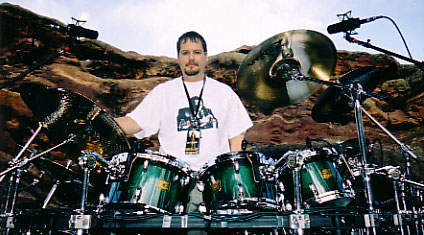
Our studio session player is ready to cut your drum track!
Click here to order your drum track NOW!
Nashville Trax announces the addition of Drum Tracks Online! If you need a drum track in your song, you can now have a Nashville session quality player such as session drummer David Northrup or session player and Montgomery Gentry’s drummer, William Ellis,track it on an excellent quality drum kit, using excellent gear and recorded by an experienced engineer.
Replace a metronome or drum machine with real drums!
Have the Nashville Trax studio drummer lock up to your acoustic guitar or piano track then build your song from there!
Replace your local band drummer with a pro session player!
Drums are the foundation of your recording yet it’s difficult to find a good local drummer capable of playing at session quality. They may be great at playing live, but studio? That’s a completely different situation.
Loosey goosey drum tracks? Use Drum Tracks Online!
Getting YOUR Drum Trax Online is easy!
1, Export your current mix as a .wav or mp3 file (start your bounce at zero). .
want our drummer to start your project, send a rough of your song.
2. E-mail or dropbox it to nashtrax@bellsouth.net
3. E-mail any notes you have or let our session pro decide what to play.
4. Pay via paypal.com to nashtrax@bellsouth.net
THAT’S IT!
You’ll soon receive a d file you can drop in and will automatically line up.
If ou prefer our drums start your project, that can happen as well.
Questions? Pricing? Text 615-319-8616
 A Songwriting & Recording Blog