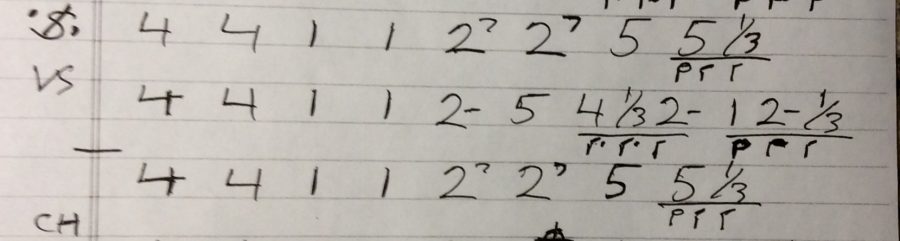
Now Tracking: Oh Lord I Sing To Thee
Posted: September 5, 2013 Filed under: Christian, Client News, Now Tracking | Tags: Paul Stookey, Play It Again Demos Song Recording Service, The Wedding Song Lyric Leave a comment This is a Play It Again Demos client project: gospel piano and vocal demo with female lead and harmony vocal ($250 for a piano/vocal plus $65.00 for harmony/bgvs = $315 total).
I feel blessed to have the opportunity to produce this beautiful, heartfelt worship song for a lady named Heather who is wheelchair bound and convinced God is going to let her walk again.
Do you believe in miracles? Please pray for Heather.
Don’t dismiss it. We had a mini-miracle occur at one of the churches I attend a couple weeks ago. A member lady’s father was rushed into surgery at a local hospital, died and the nurse came out to tell her there was nothing they could do. (Later, the surgeon said sewing together what was left of his aorta was literally like sewing two pieces of wet toilet paper together, they couldn’t do it.)
A team was still working on the father but it was a legal formality. The daughter started frantically texting church members asking for prayer, saying her father had died on the op table but the doctors were still working on him. (I was not at the church but did get the texts).
As the pastor told it the following Sunday, the husband, who happened to be at an event at the church, received the text, and asked all present for prayer. The entire church hit their knees. Soon a text came in saying his father in law had revived. Three times he flatlined. Three times his heart started again, each time after a prayer request was texted by his daughter and the church prayed mightily until the next text came in saying he had revived.
He’s alive today. The doctors are dumbfounded, They can’t explain it as medically as it was simply not possible.
Coincidence? IMHO Just Jesus doing His thing.
That’s not to say every prayer evokes a miracle but I do believe Paul Stookey had it about right when he paraphrased Matthew 18:20 in The Wedding Song: “Whenever two or more of you are gathered in His name, there is love.”
That’s one of the most beautiful lyrics ever written I think: The Wedding Song Lyric Thought provoking intelligence and simplistic innocence working in parallel. I’m not positive the human mind can create that alone.
He is love. Gather, pray and He will be there. The serendipity for we mortals is how that love plays out-b.e.

P.S. Update: The song is now tracked. You can listen to the before and after versions here!
https://twitter.com/MT_Underwood7/status/383766692515434498
https://twitter.com/vinestaylor11/status/383758842594471936
Evolution vs. God : What a Hoot!
Posted: September 4, 2013 Filed under: Christian | Tags: atheist, college, converts to Christianity, Damascus, Darwinist, Evolution, Evolution vs. God, finch, Francis Collins, Genesis, global cooling, global warming, God, Human Genome Project, Isaiah 17, Israel, macroevolution, PhD, Piltdown Man, professors, proof, Psalm 111:10, Richard Lundtrom, world has been cooling the last 15 years Leave a commentI saw this on TBN last night and just have to share it, it’s a hoot! Watch as college students majoring in various sciences are tripped up by simple questions about God, evolution and creation.
Here you can see their pied pipers (college science professors) stammer and draw blanks when asked to name one example of true Darwinist Type-To-Type Evolution.
I suppose that’s because there are none. It’s not that there’s scant evidence for anything beyond adaptation confined within a species, there’s zero evidence:
It’s a little scary this is an example of the “best and brightest” our colleges are producing. No surprise though, how can wisdom be injected into the equation when the fear of God is the beginning of wisdom and atheists are doing the teaching?
I don’t agree with the tactics employed, I’d prefer to see the love of Christ on display rather than intellectual combat but the video is still educational and a blast to watch because it’s a microcosm of the decades-old situation of scientists and creationists talking past each other. Creationists can’t understand how the “proven fact” of macro-evolution can have no observable evidence and scientists don’t understand what God has to do with science or why creationists use phrases like “it’s adaptation, not evolution” that have no meaning in scientific circles. “Evolution is evolution, period,” they say. If adaptation occurred, it’s also evolution, therefore evolution is a fact beyond debate.
The battle is over Genesis. Christian children are taught in their homes and in Sunday School that God created everything, including creating man in His image. Then in public school (why are they there to begin with, public school attendance being the very definition of child abuse?) they’re taught something that contradicts their parents and their Sunday school teacher. Often, the conclusion resolving that dichotomy is that the Bible is not truthful; that evolution is a fact; that man was not created by God in His image. They’re taught man evolved from a fish that became a small furry mammal, that became an ape that turned into man, deal with it. “Look,” they say, “Here are some illustrations to make this progression easy to see.”
It’s easy to pull the wool over the eyes of children. It’s easy to plant the seeds that will help shake their faith someday.
Like everyone else I was taught Darwinist evolution in elementary school and accepted it until 2002 when I met someone who didn’t believe in it. I was incensed! How can you not believe in evolution when it’s proven fact, I argued? I initially thought their position was at once ridiculous, unintelligent and untenable. Three days of intense debate and research later I began to realize The Theory of Evolution had gaping holes in it and was, in fact, obviously false. I published and sold a paper on that research for a few years and made a lot of money, but unfortunately, it didn’t drive me closer to embracing Christianity at that time.
Besides the flaw in the way The Theory of Evolution is being taught, I discovered dozens of discrepancies in the Theory itself, two of the more glaring flaws being:
1) Adaptation within species occurs often, but Darwinist species-evolves into-new-species evolution? There’s not a shred of evidence for it. Yet macro-evolution is taught as if it’s a proven fact, using adaptation, a.k.a. micro-evolution, as the evidential basis. Of course the scientist says, “micro-evolution IS evolution, therefore The Theory of Evolution is scientifically sound and valid as stated.”
Basically, scientists demonstrate adaptation within a type then postulate, “It’s never been observed and there’s no evidence but over long periods of time, over millions of years, these micro changes obviously must lead to types becoming other types because nothing else plausibly accounts for the variety of types.”
Try God? I choose to put my faith in Him. Scientists, however, don’t have that choice, they must invest their hope, belief and faith in time passing; science does not allow supernatural explanations. Scientists may believe otherwise privately, but in a scientific capacity they must “believe in evolution.” God isn’t allowed into the equation so evolution is the best remaining explanation.
2) Present day observable data demonstrates the exact opposite of the basic tenets of evolutionary theory. Radical anomalies that appear in a population, no matter how useful, disappear over time, they do not assimilate. In other words, babies born with two heads don’t turn into a branch line of two headed humans, the progeny of two headed parents typically have one head. (In spite of the fact we all know two heads are better than one, (LOL!).
There are no isolated branches of humans that have some radical difference from other humans such as a third eye in the back of the head; a third arm; a prehensile tail growing from their abdomen; fins, wings, or anything similar and useful that would show they’re evolving into something other than humans.
Do some mathematical calculations on the prevalence of mutation, the prevalence of adaptation and a world population of over 7 billion people, then please explain why there aren’t dozens, if not hundreds of branches of the human species evolving into something non-human.
False circular reasoning is common to all atheists. They reach incorrect conclusions because they’re unable to think outside the box of misleading information they’ve been fed by their pied pipers. They are allowing themselves to be led off the cliff of sound thinking because “wisdom begins with a fear of God.” (Psalm 111:10).
They don’t believe in God, therefore their logic skills and ability to reason erodes. It dwindles to the point long pauses, blank stares and stammering is displayed when requested to dive into the ocean of deeper logic instead of wading in the shallows they’ve confined themselves to.
More falsified missing links and data altered to fit agendas are coming. Technology is at a point where a scientist willing to be deceptive in pursuit of fame or in pursuit of an agenda can manufacture a convincing fake. It took scientists over 40 years to conclude Piltdown Man was a hoax. Just two years ago we found out the top two scientists studying Global Warming data didn’t like the fact field data wasn’t supporting their conclusion that the world was warming, falsified it, and were caught only because their hacked e-mails were made public.
The recently released correct original data reveals the world has been cooling for the last 15 years yet the atheist/leftist faction of the scientific community spouts nonsense as they attempt to save face. “Global Warming is still occurring, it’s just in a cooling phase, the heat is possibly being stored in the deepest part of the oceans.”
Hmmm. So it’s still warming, it’s just that it’s cooling?
How do you spell “convoluted logic?”
Par for the course. Remember, this brilliance originates from atheist and agnostic minds turned to mush who believe in Darwin while rejecting The Holy Bible, even when Bible prophecy about Israel comes true before their eyes. Even when this morning’s news headlines regarding Damascus sound like prophecy straight out of Isaiah 17.
How did someone who had little education, was Facebook deprived, and likely never ventured more than 50 miles from their place of birth write prophecy 2,500 years ago knowing that Israel, Damascus, etc. would even exist in the future let alone figure prominently in the daily news? How could they possibly know and correctly predict Israel would cease to exist, come back into existence, then become the absolute center of world events?
It couldn’t possibly be because the biblical prophets were dialed into a God called Jesus? A God who walked the earth in the flesh. A poor man and a handful of nearly destitute followers who created a tiny ripple in the fabric of history that became a mighty wave and only grows in intensity as time passes?
A man who was born to nearly penniless parents and never achieved much material wealth or official title, yet has influenced this world like no man born before or since? The man who forever turned logic upside down with the most profound statements ever spoken? The God-man Jesus, who the majority of past world history has revolved around and nearly all of it to come will? Could it be the biblical prophets were dialed into that dude?
Nah, that’s just too stupid to believe, huh? I bet you’d need some proof of that. “Exactly what sign would you believe?” He asked 2,000 years ago.
Jesus walked the earth, we know that. It’s independently confirmed even by secular writings of the day. It’s even confirmed he was crucified. Was he a lunatic, a liar or exactly what he claimed he was? Was He God in the flesh, who came to save us and demonstrate His love for us by satisfying the demands of ultimate justice with His mercy?
Here’s a clip of former evolutionist and biology professor at Tulane University, Dr. Richard Lundstrom, describing his remarkable conversion from atheism to Christianity as he realized that evolution is not supported by the latest discoveries in the various fields of science and it wasn’t supported mathematically. He no longer felt okay about duping his naive students with the half truths and lies necessary to teach The Theory of Evolution in total, as proven fact:
Even the head of the Human Genome Project, Francis Collins, MD, PhD, converted from atheism to evangelical Christianity! He says that DNA strands mapped for the project have a pattern that could never have occurred by chance, a creator had to be involved! As he studied them and realized exactly what he was seeing, the former atheist spontaneously began to worship.
Want wisdom? Open your Bible to Genesis 1:1 and read daily until you reach the last verse of Revelations- b.e.
https://twitter.com/NanetteVallejos/status/374661034994581506
https://twitter.com/crystal_oceans/status/375209028961714176
https://twitter.com/mckennabook/status/377963925599318016
https://twitter.com/CyStanton/status/376858387964641280
https://twitter.com/AgnesCooley14/status/375184369494659072
Rewriting Your Lyric
Posted: August 13, 2013 Filed under: Songwriting Tips | Tags: free lyric review, Rewriting Your Lyric, songs floating in the air, Willie Nelson Leave a comment
Amateurs write, professionals rewrite.
That’s an old saying but it’s mostly true. Great songs sometimes pour out in a fit of inspiration and need little or no tweaking afterward. Willie Nelson says he he sees songs floating in the air and just picks them out.
I don’t know, maybe I need glasses, I’ve never seen songs floating around for the taking but most songwriters do have a few works they claim wrote themselves.
In most cases though, that initial inspiration results in a rough draft that needs work. How do you know? If it’s not the best it can be, it needs a rewrite. Some songs are rewritten repeatedly over a period of years before they are deemed “there.”
Look for overused, tired phrases and replace them with something unique. Say the same thing but in a way no one has ever heard it put before.
If you used any “big words” to impress listeners with your brilliance, unless their use is necessary to the song and adds value, drop those words in favor of more common, conversational words. As with simple conversation you’ll impress a lot more people with fresh ideas and cleverness than with multiple syllable words that leave them thinking “He’s (or she’s) trying to sound smart,” instead of leaving them with no doubt you are.
Tighten up. Make your point in each line concisely, nothing wasted.
Don’t report, make people feel something. What feeling are you trying to evoke? Do you want the listener to feel something positive like empathy or love? Or something negative like anger? Is your lyric doing that? Make it happen.
Be open to outside input. I’ll be glad to do a free lyric review on any song you order a demo on, make suggestions and hold off scheduling it until it’s ready to go. Unless it’s a pretty extensive amount of input where I’m actually writing the lines or music instead of just making suggestions, I don’t ask for songwriting credit.
But too many times songwriters say they want constructive criticism then fight most of the suggestions that would bring the lyric up to the quality it needs to be to get a publisher interested- b.e.
Songwriting Chord Progression Tip: Root to Relative Minor
Posted: August 10, 2013 Filed under: Songwriting Tips | Tags: root chord to the relative minor, Songwriting Chord Progression Tip, voicing Leave a comment
Songwriters who aren’t trained in music theory often hear a song using a bass line movement descending from the major root chord to the relative minor, then imitate that movement in their own songs this way: (key of C) C, B minor, A minor. In the Nashville Numbers System that would be 1, 7-, 6-.
What they are actually trying to imitate is this: C, G/B, Am or in Nashville Numbers speak: 1, 5/7, 6-. The G/B means a G chord played with a B bass note. If you play guitar or piano and you’re solo you can make the movement happen by voicing the deepest pitched B note as your root for the G chord. But if you’re working with a bass player it’s fine to simply play the full G chord and let the bass player take the B bass note. Another example just to confirm you understand the concept, this time in the key of G : Instead of G, F#m, Em use G, D/F#, Em- b.e.
Songwriting Tip: It’s a Conversation!
Posted: August 8, 2013 Filed under: Songwriting Tips | Tags: a new rhyme choice, conversational lyrics, Forced rhyme, free rhyming dictionary, free rhyming dictionary online, Reversing the natural order of word, William Shakespeare Leave a comment
When writing most lyrics it’s a good idea to keep them conversational. Ask yourself if the lines and words you write are the way you would say them if you were talking to a friend. Or at least the way someone would. Someone average, not a rocket scientist.
The problems that occur when you don’t do that are numerous. There are exceptions but forced rhyme, writing over people’s head, reversing the natural order of words, and misuse of adjectives by trying too hard to be descriptive, to the point of getting freaky, are bad things most of the time.
If you have a rhyming dictionary or even if you’re offered access to a free rhyming dictionary online I wouldn’t recommend using it much, if at all. In general, if a rhyme word doesn’t come to mind easily, looking for obscure ways to force the rhyme by using unusual rhyming words or phrases is usually a dead end. Forced rhyme (imperfect rhyme words that hopefully are close to truly rhyming) is okay and lots of hits have forced rhymes but force a rhyme too much and it sounds like it. It takes the listener out of the word spell you’ve been weaving successfully to that point as they ponder the oddness of the line.
Using a regular dictionary is fine. You may need to verify what a word means and that’s okay, but don’t start looking for synonyms so you can exchange two syllables for four. You won’t appear “smart” so much as you’ll lose listeners who won’t know what you’re talking about. You didn’t until you looked it up, why would they? For the most part, choose words you’d use in everyday conversation.
Probably the most common mistake I see is reversing the natural order of words. “To the park went we” may rhyme with “bee” but no one says it that way unless they’re trying to get their William Shakespeare on. The average person would say, “We went to the park.”
Reversing the natural order of words in a sentence usually hits the ear funny and breaks the spell instead of pulling listeners further into your story.
It’s weird. It’s not “unusual but in an artistic way” weird; man, it’s just plain weird. Write a different line. If you can’t find one you’ll need to fix the “bee” line first to give yourself a new rhyme choice.
And I guess that’s the bottom line for all these points: Does this word or phrase add to the song or detract? Does it pull the listener in further or momentarily push them out? The amateur considers neither, the pro considers both and lets the answers make the decision for them.
One exception that comes to mind because I’m working on it now is “Beautiful, the mess we are” in Better Than A Hallelujah. Obviously intentional and obviously awesome, it makes the song!
Anyway, for the most part, keep your lyric natural, conversational, and all will be well. Or maybe all well will be…hmmm, let me think about that, lol- b.e.
https://twitter.com/DaveWritesSongs/status/373685768616554496
Six Songwriters Signed
Posted: August 7, 2013 Filed under: Music Industry News Leave a comment
Sony Music Publishing, Nashville
Song Factory is reporting the signing of 6 songwriters to their roster. They are an indie song publishing company with connections to several labels including Capital and Sony.
It may sound like your dream job (and this is not regarding SF specifically) but depending on the company and who they’re signing, a staff position can pay well or poorly. If you have written or co-written several hit songs, you generally are less risk and get a better paycheck. There are many staff writers who are signed as staff writers but get no pay so they must work a day job and write songs when they can.
Sound familiar?- b.e.
Play It Again Demos : We Save Files!
Posted: August 5, 2013 Filed under: Client News | Tags: "Bits of Forever", .wav copy via Dropbox, James Lefik, original session into Pro Tools, play it again demos Leave a comment
I just mailed out CD copies this morning to Play It Again Demos client James Lefik. Nine years ago, Jim had me produce a very basic demo of his song “Bits of Forever” and later, a much more elaborate full band demo. Back then CDs ruled and he had some copies made. But over time they were given away, lost or misplaced.
I mentioned how meticulously we backup session files on the post regarding the Kerry McFate session
Well 9 years have gone by, yet, when Jim asked if files were available they were! We were able to upload the original session into Pro Tools, execute a mix, and give Jim not only CDs but also a .wav stereo mix copy via Dropbox and an MP3 via e-mail! All for only $150!
Without the backup Jim’s only option would have been to pay for the entire demo all over again.
These days almost all mix files are stored on hard drives. Even if you have external backup, you’re only a lightning strike or multiple hard drive failure away from losing your work- b.e.
Microphone Locker: The AT 4040
Posted: August 5, 2013 Filed under: Studio Equipment | Tags: at 4040, audio tecxhnica, play it again demos, when is a low price microphone better than expensive mic. nashville trax Leave a comment
A pair of At 4040’s used as overheads on our studio drum kit
The fact we have a pair of matched AT 4040 microphones is yet another reason to choose Play It Again Demos (our over-the-internet demo recording service) or Nashville Trax to do your recording work. They let us give you predictably fantastic drum sounds, and they add one more color to the producer’s palette.
For large diaphragm condensors they’re “cheapies” listing at around $500 each and retailing about $300. But price is irrelevant to application. In other words, a $150 dynamic microphone will sometimes outperform a $3,000 condenser microphone, it depends on what you’re trying to achieve.
The AT is listed as having relatively flat response across the audible spectrum from 20 HZ to about 20K. In actual use I’ve discovered it is a little heavy on the bass end, not muddy, just loud, and crystal clear in the mids. The high end is clear too but if that’s what the application requires, you have to roll off the bass to reveal it.
We use a pair of AT’s for drum overheads so normally I keep the 80 Hz, 12 dB/octave switch set to minimize the bass response. Once EQ’d properly, they shine as overheads.
I feel blessed here at the studio in two ways. We have a good selection of mics to choose from that cover every recording situation, plus we have a drum kit set up permanently.
So many studios let the drummer furnish the drums and that means setting up and tearing down the whole kit for most sessions. Then the mics have to be set up and re-calibrated each time. It can be done but I have zero time for redundant, skull numbing mindlessness and there’s no way you’ll achieve the consistently great sound inherent in a permanent drum setup unless you have one. So we do.
Comments from seasoned studio musicians on the drum sounds are typically, “I wish my kick drum sounded like THAT!” and, “The drums sound PERFECT, don’t change a thing!”
The drums alone have 9 microphones: bass drum, snare, hi-hat, 3 tom mics, the two AT 4040’s, and a room mic. I can fire up the gear, the drummer can simply sit down and start pounding away and with minimal tweaking, we’re ready to record.
All that being said I must admit that I sometimes pull an AT off the drum kit, usually out of desperation because a far more expensive mic isn’t getting it done. And usually the AT excels. I’ve used them on background vocals, fiddle, even horns.
On one session I used an AT for lead vocal instead of a $1,000 mic that pre-session I figured would almost certainly work because it had for that same singer many times prior. Both the singer and I agreed: The AT simply sounded better for his voice that day- B. E. Watson
Tough Gig and Tougher Crowd: The Battle of Franklin TN
Posted: August 5, 2013 Filed under: Uncategorized | Tags: Dixie, Robert E. Lee's right hand man in The Battle of Gettysburg, Sherman Drove Old Dixe Down, Southern General John Hood, Winstead Hill Leave a comment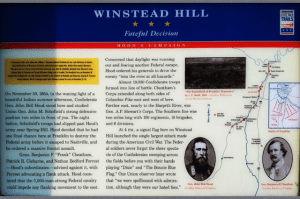
Plaque describing the Battle of Franklin. The lower right corner is where the quote below was pulled from.
On November 30, 1864 the Southern General John Hood held a position on the hill where the park is now located. He decided to attack the Northern troops located toward Franklin. His line was the largest single array of troops in the entire war, some 19,000 men moving shoulder-to-shoulder across the fields at the foot of the hill.
The plaque pictured above tells it best:
At 4 p.m. here on Winstead Hill, launched the single largest attack made during the American Civil War. The Federal soldiers never forgot the sheer spectacle of the Confederates sweeping across the fields before you with bands playing “Dixie” and “The Bonnie Blue Flag.” One Union observer later wrote that “we were spellbound with admiration, although they were our hated foes.”
Maybe the musicians should have altered the playlist with a tune less controversial than “Dixie.” The Union troops listened for a bit then opened fire. When the smoke cleared at day’s end there were over 6,000 Southern casualties. The action was a disaster for the South.
If I were the general I’d have suggested playing “Why Can’t We Be Friends?”
In just the first few minutes of battle, five Southern generals lost their lives in the field just to the right of the hill. Altogether 15 Southern Generals were killed in the fierce fight. Hood’s forces were rendered incapable of effectively engaging in battle for the remainder of the war.
If memory serves correctly Hood was Robert E. Lee’s right hand man in The Battle of Gettysburg, afterwards going to GA to harass Northern General Sherman near Atlanta as Sherman “Drove Old Dixe Down.”
Imagine walking from Gettysburg to Atlanta and on to Nashville as these troops must have done, including the musicians. Tough gig, tougher crowd– b.e.

One of many markers on the site detailing the battle. Man, I greatly enjoy history but let’s inject wisdom in all situations and pour out understanding, tolerance and love instead of hate so we never get to this point again as some are now calling for. Our nation torn in two, boys not yet in their prime being slaughtered and killing each other by the truckload? It can’t be near as much fun as it sounds.
https://twitter.com/mal_pal14/status/374002758439153664
https://twitter.com/SeaRavenPress/status/374117426394562560
https://twitter.com/shnake_10/status/374048717541621761
Songwriting Tip : Adding A Suspended 4th in a progression
Posted: August 5, 2013 Filed under: Songwriting, Songwriting Tips | Tags: Adding A Suspended 4th in your song, chord, resolve, sus4, suspended Leave a comment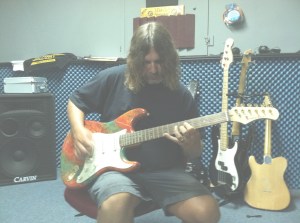
If you play the notes that comprise a D major chord: D, F# and A (the root, the third and fifth respectively) and raise the F# one half step to G, you have created a suspended fourth. It’s a pretty sounding chord and one you’ll surely want to use in at least a few of your songs. Note that all F#s voiced in the major chord would need to be raised to the G note.
The raised third note sounds like it wants to resolve back to the third so the easiest and most common way to employ it is by playing the suspended chord followed by the major (Dsus4 to D) or vice versa (D to Dsus4). You could do this movement once or several times.
So the formula is: root, 4th, 5th of the major scale. Example: To create an A suspended 4th use the A major scale as the basis which is A, B, C#, D, E, F#, G#, A octave. The root is A, the 4th note is D and the 5th is E so A, D, E are the notes of an Asus4.
There are other uses that will be covered in future posts.
https://twitter.com/JoshuanGonzales/status/372955420064641024
Songwriting Tip: Three Chord Groups
Posted: August 4, 2013 Filed under: Songwriting Tips | Tags: Bill Watson, Chord Chemistry Ted Greene, chord progressions, chord rules, chord substitution, guitar shop by bill watson, three chord groups, tonic dominant seventh Leave a comment
Knowing a few chords on guitar or piano is a good thing but some roughs I’ve reviewed here reveal that some newbie songwriters aren’t sure how to use them together. Sometimes chords are used that don’t support the melody or several chords are used that inadvertently introduce a new key in a spot where that shouldn’t happen.
Hopefully this post will reduce that confusion slightly, but in the larger sense, it’s aimed at introducing the abecedarian songwriter to the concept that there is a right way and wrong way to use chords, thus fueling the desire for further exploration of the principles.
Huh, abecedarian… pretty good word, eh? It means neophyte or beginner. Use it to replace a cuss word: “Listen, you abecedarian…” : )
As in most endeavors, there are rules. Rules can be broken but songwriters who don’t know the rules in the first place tend to break them in a bad way, in a way that detracts rather than enhances.
So here is a rule of sorts: Inject a sense of order in the writing process by employing a chord progression, which is several chords played in sequence that sound good together and firmly establish a key. There are many chord progressions that are accepted in music theory as “standards” and are used over and over, the simplest being the three chord group.
Many hit songs are written using only a three chord group, some with as few as two of the three chords in a group.
The easiest three chord groups to play on guitar are:
1. E, A, B7th
2. G, C, D7th
3. A, D, E 7th
4. C, F, G7th
5. D, G, A 7th
All of those can be played on guitar using open chords (chords that contain unfretted notes). The first chord in the three chord sequence is the tonic chord a.k.a. root chord. The second is the dominant chord, the third is the sub dominant or sub dominant seventh.
A three chord group is based on the major scale. Choose the 1st, 4th and 5th notes of a major scale and those notes name the three chord group for that scale with that 1st (the root note) naming the key. Also add a dominant 7th (7th) to the final chord (although the 7th is sometimes omitted).
For example, the notes in a C Major scale are:
C, D, E, F, G, A, B, (and back to C, up one octave in pitch from the original C).
The 1st, 4th and 5th notes of the C Major Scale, counting from C are C, F, G. So in the key of C, (C because the first note, the root note, is C) the 3 chord group is C, F, G. In the Nashville number system they’d be referred to as 1-4-5.
Click here to read the rest of this post, including how to use a three chord group to write a song and how to employ the principal of chord substitution.
Or you can skip the free stuff and go straight to the books this post is drawn from, we’re barely scratching the surface here. If you want to learn very basic open chord progressions and simple rhythms get my book Guitar Shop. If you want to learn more complicated chords, extended chords, how non-root bass notes work and learn all the chord substitution rules, get Ted’s book– bill watson
Get On Track With The God Of Wonders
Posted: July 31, 2013 Filed under: Christian | Tags: Beyond our galaxy, Chris Tomlin God of Wonders, focus energy Leave a commentThe radio alarm sounded this morning with this song and it was such a perfect wake up call I thought I’d share. A GREAT way to start the day or anytime really.
Focus and energy just pour on in!- b.e.
 A Songwriting & Recording Blog