Great Day of Tracks Online Work At Nashville Recording Studios
Posted: February 21, 2014 Filed under: Now Tracking, Studio Services, Tracks Online | Tags: Banjo Tracks Online, Jenee Fleenor, Mike Duchette, Nashville music producer Bill Watson, nashville trax recording studio, piano tracks online, Sir Ronald Fairchild, steel guitar tracks online, The Oak Ridge Boys Leave a comment
Our fiddle player, Jenee Fleenor solos at a Martina McBride concert. Jenee is available through Fiddle Tracks Online to play on your song, just one of the many world class players on our roster!
A great day of work for our new service, Tracks Online, which offers self-producers high quality instrument tracks over the Internet.
First a 10 a.m. at Nashville Trax Recording Studio to record four tracks of Mike Duchette Steel Guitar Tracks Online and two tracks of harmonica.
Then it was off to our Pro Tools HD sister studio in Hendersonville, TN to produce seven tracks of piano and strings played by The Oak Ridge Boys long time band member, Sir Ronald Fairchild, for our Piano Tracks Online service on a project for a client in Quebec, Canada.
Just in time too, Ron had to catch the band bus to the airport at 4 a.m. for a flight to play at an Oaks performance in Puerto Rico. Five star hotels, a one day paid layover to do some sightseeing, catered food, all to do a one hour show…hey it’s a tough life but somebody has to live it!
Finally, caught up!
Until returning to the studio where a Banjo Tracks Online order had just been confirmed via e-mail. The client’s mp3 will arrive in a few hours. Love it!- b.e.
Need an instrument track? Saxophone? Harmonica? Dobro? Mandolin? Nashville music producer Bill Watson will choose the perfect session player to add to your mp3 mix and send it back as a high quality .wav file that will lock up perfectly for your mix and give you exactly what you need to make an impressive, spectacular song demo or master!
Songwriting Tip: How To Self-Critique Your Own Country Lyric
Posted: February 20, 2014 Filed under: Songwriting Tips, Uncategorized | Tags: Bridge, self-critique your own lyric Leave a comment
Before pitching your songs or even before recording, have your lyric critiqued for free by clicking here!
If you intend to pitch your country lyric with the hope of obtaining a hit record, know this: it will be scrutinized for flaws by the gate keepers- industry pros like music publishers and screeners- before it ever gets near the eyes of an artist. Here are several fatal flaws you should avoid, preferably before cutting the demo. Review your lyrics to see if they have any of these.:
1.“Too Wordy” Many times your first efforts will be long winded. You can usually convey the same message with fewer words, both in the song as a whole, as well as in individual lyric lines. Cut the fat.
2. “Cramming In” If you’re singing along with your melody and find you’re struggling to make the words quite fit in a given space it’s going to sound that way to a listener. Writing more words in a line than the singer is comfortable singing, unless done intentionally for the effect, is bad writing. Take some out or rewrite the line.
3. “The Song Goes On Forever” If you have crafted five verses doubled up on every chorus and put in both a solo and bridge, your song is going to land at 5 to 7 minutes in length. That’s too long if you’re aiming for radio airplay. Radio likes 2 1/2 minute songs. It may be painful but you need to delete several sections.
4. “A Too-Long Bridge” Often a song is rolling along, holding the listener’s interest but bogs down in the bridge that’s twice as long as it needs to be. Can your bridge convey what you need it to in 8 bars instead of 16? 4 instead of 8? Do it!
5. “Stale Ideas” Does your lyric have a lot of clichéd phrases? Instead of “She drinks like a fish and gets stupid” which everyone has heard before, replace that phrase with something unique and fresh such as, “She’s an alcohol drain, a meatball brain”. And no place is more critical to replace clichés in than the hook.
6. “Reversed Order”. Don’t reverse the natural order of words just to create a rhyme. Country lyrics should be conversational. If you wouldn’t speak it quite that way,, unless your only listener will be Yoda, don’t write your country lyric that way.
While hardly comprehensive, this list will help get your lyric on the right track- b.e. watson
Songwriter Demo Recording Sessions
Posted: February 19, 2014 Filed under: Christian, Now Tracking | Tags: Brittany Lane Baptiste, Free, Songwriter Demo Recording Sessions Leave a commentThe guys from Mission 615 in Nashville Tn stopped by to lay some tracks on their new Christian rock song song “Free” and singer Brittany Lane Baptiste was in to sing harmonies and bgvs on 5 different songs.

Session singer Brittany Lane arrives to sing on a songwriter demo
The guys from Mission 615:
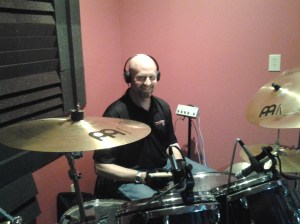
Drummer for Jesus, Darrell Hcks

Mission 615 singer Grant Anderson

Mission 615 Guitarist, Tony Pizzino
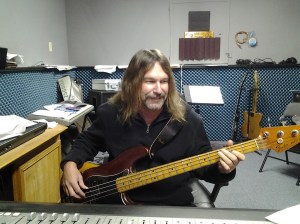
Bill Watson playing bass guitar with the guys from Mission 615
Now Tracking: 5 More Songs for Client Gary Nowak
Posted: February 19, 2014 Filed under: Client News, Client News, Now Tracking | Tags: Gary Nowak, Gasoline, play it again demos, You Tube Leave a comment
Your Songs Can Be On The Next Session! Ask For A Quote!
5 songs just in and confirmed (paid for in full) for Play It Again Demos client Gary Nowak.
We’ve produced several projects for Gary in the past. Recently, he began a business creating professional videos based on our work (so far he’s gone to video with a song we produced for him called “Gasoline” and another titled “Miracle At Work”) and posting them on You Tube. They are filmed by professional photographers and employ actors to lip sync to the recording.
Obviously his enterprise is becoming successful. See this link for details about what Gary is doing:
More About Gary Nowak Projects
Brandon Chase added to Nashville Vocal Tracks Online Service!
Posted: February 18, 2014 Filed under: Studio Services, Tracks Online | Tags: Brandon Chase, country singer Brandon Chase, Nashville Trax Online service Leave a comment
Country Singer, Brandon Chase
You know him from The Voice with Blake Shelton, but for a limited time you can have Brandon Chase sing your demo! This is your chance to catch a rising star!
He’s working on his first album right here in Nashville and is eager to sing on demo projects.
With our over-the-Internet service, Nashville Trax Vocal Tracks Online service, the singer you choose from our roster will sing to the mp3 you send us of your home-produced, or local-studio-produced project!
We return a high quality .wav file in the format that works with your digital audio workstation, it locks right up automatically!
Why not have Brandon sing your tune? More info can be found by clicking on Brandon’s picture above.
Songwriter Signs With DayWind Music Publishing
Posted: February 18, 2014 Filed under: Music Industry News | Tags: Daywind Music Publishing Leave a comment Southern Gospel songwriter Dianne Wilkinson has re=signed an exclusive agreement with Daywind Music Publshing in Hendersonville TN.
Florida Georgia Line takes BSC’s “Stay” to #1, Meets Band Members.
Posted: February 14, 2014 Filed under: Music Industry News | Tags: ASCAP, Billboard, Black Stone Cherry, Brian Kelley, florida georgia line, Fred Young, tyler hubbard Leave a comment
Sony Music Publishing, Nashville
Florida Georgia Line’s Tyler Hubbard heard “Stay” on a Black Stone Cherry album and decided to cut it.
Great instincts.
BSC headed to Nashville for the first time and met with Tyler Hubbard and Brian Kelley at the ASCAP offices on Music Row two days ago (Feb. 13th) to celebrate. The song stayed in the #1 Billboard position for 4 weeks.
“This is crazy, for us to write a song when we were sitting at the house, and then for it to become a success on Country radio,” said BSC member, Fred Young.
Southern Rock Pitch Opp: Old Southern Moonshine Revival Recording Soon
Posted: February 13, 2014 Filed under: Song Pitch Opportunity | Tags: Danny Myrick producing, Old Southern Moonshine Revival, Southern Rock Leave a commentOld Southern Moonshine Revival (based in Nashville, TN) needs uptempo Southern Rock tunes for an upcoming recording project.
Submit to:
LAMusicPublishing.1@gmail.com. Contact for permission before submitting.
Danny Myrick producing.
How To Get A Record Deal In Nashville
Posted: February 12, 2014 Filed under: Music Industry News | Tags: buy your way in to a record deal, how to get a record deal in Nashville, You Tube Leave a commentSony Music Publishing, Nashville
Talking with a fellow music producer about two weeks ago, we compared notes on how to get a record deal in Nashville. A few days later there was an article published in one of the local magazines regarding You Tube. Part of it discussed the relevance of You Tube hits in this town.
While all that is still fresh in my mind, here are the most important points:
1. By far the most predictable, reliable way to get a record deal in Nashville is to come here with a proven product. Make a name for your act regionally, prove you can put people in the seats, prove you can sell T-shirts, sell downloads, etc. and the labels will be interested. It helps to have a management team in place, an entertainment lawyer, experience opening for big name artists, and experience giving radio/television interviews. The closer you can get to making the deal turnkey for the label, the more likely it happens.
2. Be the national winner or place high in an American Idol style, national competition. Obviously it’s worked for some artists. But others have won shows nationally, yet ultimately went nowhere.
3. Come to town with wheelbarrow loads of cash. Yes, the word is it’s possible to buy your way in to a record deal. I’ve discussed the figures batted about at downtown meetings with singers who worked for me, singers who were just in these types of meetings. How much cash? Lots. Figures I’ve heard firsthand from singers involved in negotiations usually are at least $500.000 to over $1,000,000.
The story goes that Taylor Swift’s Dad paid upfront fpr her deal then bought enough copies of her first release to ensure it hit the #1 Billboard spot. I have no idea if it really happened but many in this town tell that story over and over, typically relayed as if it’s practically evil. If I had that much money to toss around and my daughter gave me the puppy dog eyes I mean, come on, done deal! I call it a father’s unconditional love and belief in his little girl, a beautiful thing. And hey, once there, Taylor had the songwriting, vocal skills, looks and personality to not just sustain it but take it to heights few have ever achieved.
4. Move here with talent. So much of the advice on this subject begins and ends with this point. Move here, network and “get discovered”. But both my producer friend and I agree: the labels aren’t particularly interested in slightly above average singers with good looks and some personality. That describes half the people in Nashville.
I’ve seen plenty of those, probably the very best in their local area, come to Music City, try with all they had to get signed, then move back home a few years later, their dream severely altered. Some aspect of your talent likely needs to be exceptional, even for here, to hang your hopes on that card.
You Tube? Enormous numbers of views racked up on You Tube that might get you a deal elsewhere, or at least get you an appointment to talk to A&R people, elsewhere, are currently not being taken seriously here by most A & R people, at least according to the article.
So Nashville A & R has been lagging a bit in grasping the significance of the Internet and how it’s changing the way acts are discovered but perhaps the article itself has already started to wake up the powers that be to the fact tons of You Tube hits can equal pre-packaged fame as well as fortune and both can be capitalized on.
Include your anywhere-else-they’d-be-so-impressed-by-this You Tube view numbers, download sales numbers and such in your promo package. They can’t hurt and may help- b.e.
The Right of First Release: It’s Importance to a Songwriter
Posted: February 11, 2014 Filed under: Songwriting, Songwriting Tips | Tags: current statutory rate is, mechanical license, right of first release Leave a comment
When you write a new song you automatically have an intangible, yet potentially valuable, right called “the right of first release.” It simply means you have the right to determine the when, where and who of the song’s first public release.
After that first public release that right is forever lost. From that point on it’s open season. Anyone who wants to record the song after the initial release can simply notify you of their intention and request that a mechanical license be issued. You do not have the right to refuse that request. If you fail to honor it, and they have proof they requested a license but were ignored, they can proceed without it, and if you pursue them, pay you at that point.
You have the option to grant a license for up to 10.000 copies with a small sum paid in advance to cover the first 2,000 copies downloaded or sold. The current statutory rate is 9.1 cents per copy so it totals $182.00. Get it, if it’s an independent release it may be your only payment from that version.
Yes, this means if you are a singer and want to record a cover of a hit song by a famous artist you may do so provided you obtain the mechanical license.
Giving up your right to first release can affect your options later. It may limit the number of outside artists who will be interested in your song. If you have a “big name” artist interested, but a less popular artist releases it just prior, the big name may lose interest. That situation isn’t common, just possible; many songs have a first release plus multiple covers by many different artists. Some songs have been recorded by hundreds of artists.
Also rare but possible, a music publisher may decide to pass on signing a song that doesn’t have the right of first release attached- b.e.
Sax Tracks Online! Real, Custom Saxophone Tracks For Your Self Produced Project
Posted: February 9, 2014 Filed under: Studio Services, Tracks Online | Tags: John Heinrich, Nashville, Sax Tracks Online, saxophone, session player Leave a commentHave a Nashville session sax player, the sensational, John Heinrich, ready to add his work to yours! Oh it will sound so good!
Check out:
You don’t have to worry about what microphone to purchase. No worries about acoustics or microphone placement. No fretting over where you can find a great sax player who can actually deliver you a useable track. Just make an mp3 mix, e-mail it, pay via Pay Pal and a pristine sax part played by the amazing John Heinrich comes back at you in no time!

John Heinrich, Sax Tracks Online
Songwriting: Tips On Writing Contemporary Christian Rock Songs
Posted: February 7, 2014 Filed under: Christian, Songwriting, Songwriting Tips | Tags: chorus, Glorify You Alone, intro, Nashville Number System, songwriting, verse, writing contemporary christian rock songs Leave a comment
Just a few quick tips gleaned from working with the church band the last few weeks that will help you when writing Contemporary Christian rock songs. There are several elements that are common to them you might keep in mind as you write:
1. They tend to follow the intro, verse, chorus, verse, chorus, bridge, chorus format.
2. They frequently present a twist on that format: A chorus upfront. Or perhaps an instrumental interlude appears very early in the song and again just prior to the bridge or final chorus. Or a chorus or a bridge repeats many times more than you might in a secular tune aimed at getting radio airplay, this is usually in a worship song at a medium or slow tempo.
3. There are Christian songs and there are worship songs. The lyric in a worship song focuses on worship God in a personal way, i.e., “You are The King, the savior, you are the glorified one.”
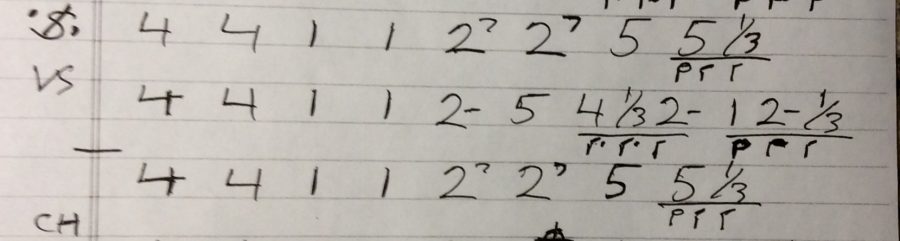
4. The chords tend toward simple four chord progressions but an amazing number use the tonic, a.k.a. the 1 chord, followed by the 5 chord with the bass playing the third of that chord instead of the root, then on to the relative minor (E, B/D#, C#m) or (G, D/F#/ Em) to give two examples. In the Nashville Number System it’s the 1, 5/7, 6- progression.
The “Glorify You Alone” video above utilizes that very progression as well as several other tips presented in this post.
5. The lyrics tend to be simple, there aren’t many CC rock tunes that feature wordy lyrics or complex concepts. One exception to that is the lyrical masterpiece “He Loves Us” (Jesus Culture, David Crowder Band and others) with it’s lines like this in the Jesus Culture version: “And Heaven meets earth like a sloppy wet kiss and my heart turns violently inside of my chest.”
6. The bass line and drum chart often create the dynamics of the arrangement, which typically builds as the song progresses. In some songs, the build reaches an apex then quiets up at the end, some songs plow right on through at full tilt, apex to end.
7. The bass guitar lays out a lot. It might stay out until the chorus appears or even until the second chorus. Sometimes, even in a chorus or verse where you’d normally expect it to continue, the bass and drums drop out, then drums play alone, then the bass comes in to provide power, maybe thumping quarter notes then going to eighths and the bass/drums really drive the song hard at that point.
7. Thumping out eighth notes on bass is very common, especially at tempos around 80 beats per minute, but it can occur at any tempo anywhere the lyric gets intense and emotional. Sometimes it’s “pound out 8ths” beginning to end with just a few runs tossed in here and there.
“Glorious” by B.J. Putnam is 145 BPM and most of the choruses are driven by 8ths while verse 1 is whole notes and V2 does a cool little delayed scale walk starting on the “&” of beat 2.
Although you can write your song on acoustic guitar and let the musicians on the demo provide some of the elements discussed here, as well as decide where they should happen, I believe envisioning, or “hearing” how it will sound in regards to dynamics- where does the supporting music stay quiet and where does it get huge- can positively affect the lyric writing process- B.E. Watson
 A Songwriting & Recording Blog